How to read flag color pie charts
A pie chart keeps a flag's colors but removes their arrangement. Learning to read that balance is a different skill from recognizing a waving flag.
Start with the background, then the details
The largest slice is your best starting point. Ask whether that color could be a solid background, several stripes or a large shape. Then look at the smaller slices: a star, sun or coat of arms can add colors that are easy to overlook.
The order of slices does not tell you where the colors sit on the flag. A chart cannot show whether stripes are vertical or horizontal, or whether a circle sits in the center or off to one side.
Three examples to practice with
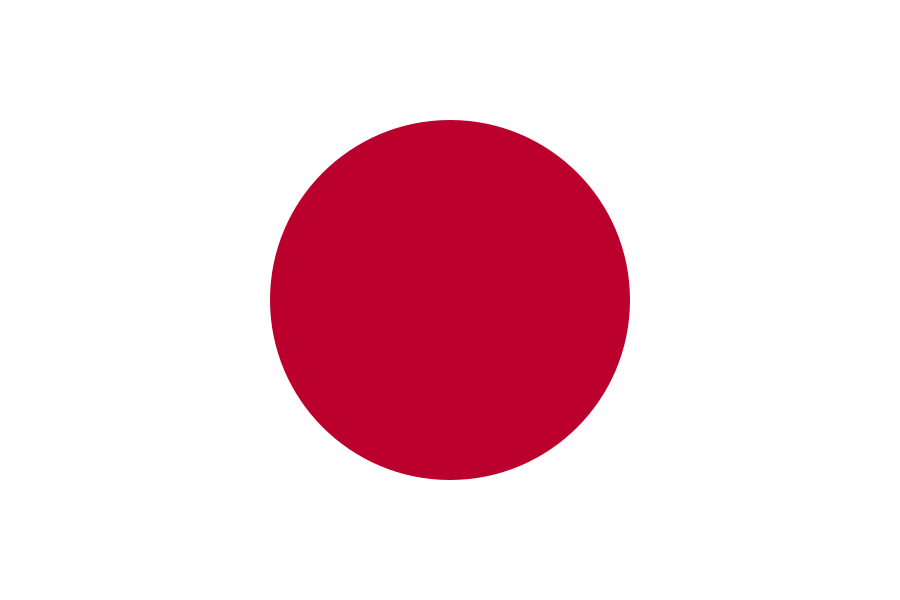
Japan: the background matters
The red disc is visually distinctive, but white covers more of the flag. In a pie chart, expect a larger white slice and a smaller red one, not equal halves.

Bangladesh: a similar shape, a different palette
A red disc also appears here, but the background is green. The pie chart keeps that distinction while hiding the disc's position. Compare the dominant color before focusing on the red.
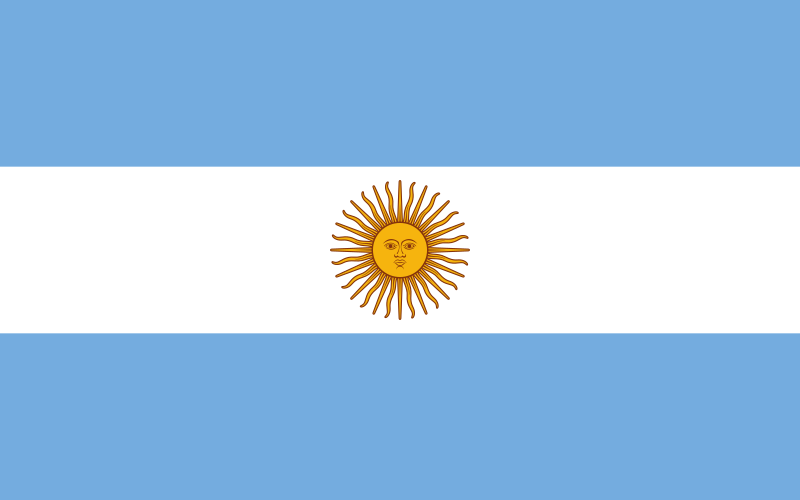
Argentina: remember the sun
The blue and white bands dominate, but the sun adds small golden details. Looking only at the two largest slices can make you miss a useful clue.
Why some flags look alike as charts
Indonesia and Monaco both use red above white. Removing the layout leaves a very similar two-color balance, although digital shades and image specifications can differ. Other flags share palettes even when their designs are quite different.
There is not always a unique answer from colors alone. In FlagCake, use the geography hints to distinguish similar candidates. The rules guide explains when each hint unlocks.
How FlagCake calculates the colors
FlagCake renders a locally stored SVG flag, samples its pixels and maps them to the nearest color in that flag's reference palette. The palette uses digital HEX references from FlagColorCodes. This helps avoid showing blended edge pixels as invented extra colors.
The game then calculates proportions from those samples. Similar small details below 1% may be combined into a nearby color, while distinct details can remain separate. Displayed percentages are rounded, so their sum may not be exactly 100%.
These are approximate proportions of a digital image, not official specifications for manufacturing a flag. Sampling, simplified artwork, grouping and different flag variants can change tiny slices. Reference HEX colors are not a guarantee that every physical flag uses precisely the same shade.
Flag images come from Flagpedia / FlagCDN; country facts come from mledoze/countries. See full data and image credits, including the downloadable country dataset.
Put the colors to the test
Try the daily puzzle for a shared challenge, or practice one region in free Endless mode. After each round, compare the revealed flag with the chart to connect the colors back to the design.